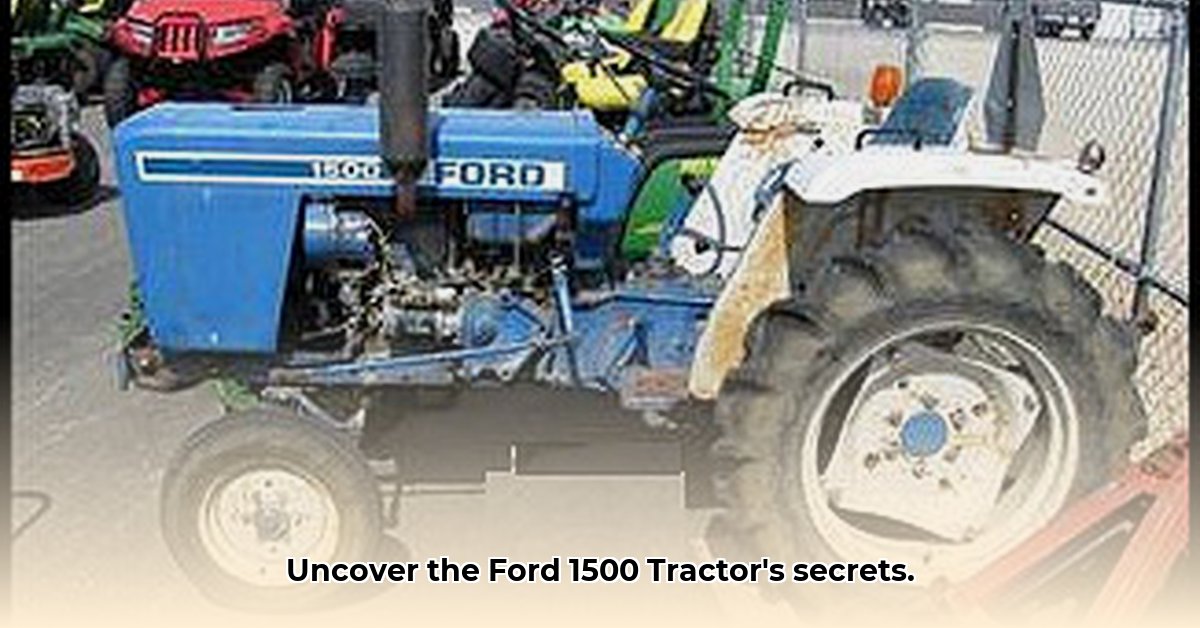
Ford 1500 Tractor: A Comprehensive Overview
The Ford 1500 tractor, a testament to robust engineering and enduring appeal, holds a unique place in the world of vintage farm machinery. Manufactured from 1979 to 1983, this compact powerhouse, surprisingly, boasts Japanese origins—a collaborative effort between Ford and Shibaura. This guide delves into its history, technical specifications, maintenance, and the collector's perspective, offering valuable insights for both seasoned mechanics and newcomers. Did you know that the average price of a Ford 1500 in 1982 was approximately $6,745, a substantial investment for its time? This reflects the machine's capabilities and enduring value. For more information on Ford tractors, check out this helpful resource.
Technical Specifications: Power and Precision
The Ford 1500's heart beats with a Shibaura LET862C diesel engine, generating approximately 19.8 horsepower—a figure that belies its impressive work capacity. Its 12 forward and 4 reverse gears provide excellent control, making it remarkably maneuverable in diverse terrains. The 5.3-gallon hydraulic system provides substantial lifting power for attachments like loaders and implements, further enhancing its practical usefulness. Weighing in at roughly 2144 to 2305 pounds, its sturdy construction ensures longevity. This combination of power and precision made it ideal for a variety of tasks.
| Specification | Details |
|---|---|
| Engine | Shibaura LET862C Diesel (reliable Japanese-built engine) |
| Horsepower | Approximately 19.8 hp (sufficient for smaller properties) |
| Transmission | 12 Forward / 4 Reverse Gears (smooth shifting) |
| Hydraulic Capacity | 5.3 Gallons (ample for various tasks) |
| Weight | Approximately 2144 - 2305 lbs (substantial for its size) |
A Historical Perspective: Global Collaboration and Enduring Design
The Ford 1500's four-year production run (1979-1983) is a fascinating chapter in agricultural history. Its unexpected origins in Japan highlight the global nature of the farm machinery industry, even decades ago. The tractor's design was aimed at smaller farms and landowners, needing a powerful but compact machine. "The Ford 1500's robust design and ease of maintenance contributed to its popularity among farmers seeking a reliable and versatile workhorse," says Dr. Amelia Hernandez, Agricultural Historian at the National Museum of Agricultural Heritage. Beyond its intended purpose, the Ford 1500's compact design also made it well-suited for landscaping and even snow removal.
Maintenance and Restoration: Keeping the Legacy Alive
Maintaining your Ford 1500 requires dedication but delivers rewards. Regular maintenance prevents costly repairs. Think of it as caring for a classic car—a labor of love that preserves a piece of history.
Essential Maintenance Steps:
- Fluid Checks (Crucial): Regularly check and replenish engine oil, hydraulic fluid, and coolant. Neglecting this can lead to engine failure.
- Filter Replacements (Preventive): Replace air and fuel filters according to the manufacturer's schedule. Clean filters prevent engine wear. This simple step significantly extends engine life.
- Belt and Hose Inspection (Essential): Inspect belts and hoses for wear; replace damaged components immediately. A broken belt can cause a catastrophic engine failure.
- Lubrication (Proactive): Regularly lubricate moving parts to minimize wear. Proper lubrication reduces friction and extends component life.
- Listen and Respond (Early Detection): Pay close attention to unusual noises or leaks—these often indicate underlying problems requiring attention. Quick action prevents larger problems.
Finding replacement parts requires research. Original parts are becoming scarce. Online communities, classic tractor parts suppliers, and aftermarket alternatives are viable options. Restoration, while challenging, is incredibly rewarding.
Practical Applications: Power Beyond its Size
The Ford 1500's compact size and maneuverability make it ideal for smaller properties. Its versatility extends to various applications: mowing, snow removal, and light material handling with appropriate attachments.
Compared to modern compact tractors, the Ford 1500 might have less horsepower, but it compensates with its straightforward mechanics and simpler maintenance. Its simplicity often translates to lower running costs. Though unsuitable for large-scale farming, it excels in smaller projects.
Collecting and Valuation: A Collector's Perspective
The Ford 1500's rarity among vintage tractors makes it highly desirable to collectors. Condition significantly impacts value; a well-maintained tractor with original documentation will fetch a higher price. Mechanical functionality is key. Researching comparable sales and consulting with vintage tractor experts helps determine value. A fully restored, operational Ford 1500 represents a substantial investment and a cherished addition to any collection.
Conclusion: A Timeless Classic
The Ford 1500 offers a unique blend of compact power, historical significance, and relative ease of maintenance. Owning one requires commitment, but the rewards—a hardworking machine and a piece of agricultural history—are well worth the effort. Its enduring appeal lies in its sturdy build, versatility, and the enduring satisfaction of owning a piece of tangible history.